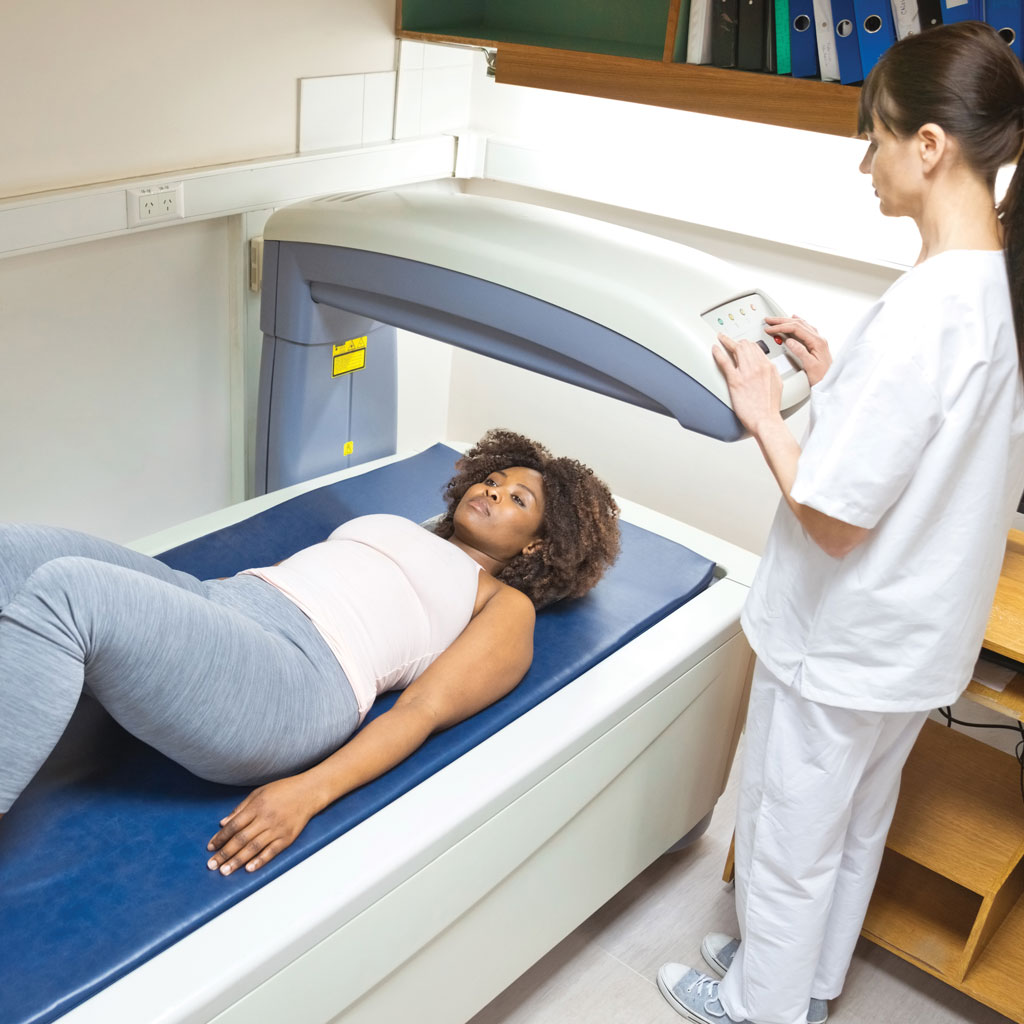
If your doctor has recommended DEXA bone density scans, you may not be entirely sure what that means or what to expect. You’re not alone. Many women receive this recommendation without a clear explanation of why it matters or what the test actually involves. This article aims to answer the most common questions in plain, straightforward terms.
What are DEXA Bone Density Scans?
A bone density test, most commonly done using a scan called a DEXA, measures how strong your bones are. Think of it like a snapshot of your bone health at a given point in time. The scan looks at specific areas, usually the hip and lower spine, because those are the spots most likely to be affected by bone loss.
The test itself is simple. You lie on a padded table, fully clothed, while a scanning arm passes slowly over you. It typically takes just 10 to 15 minutes, there’s no injection, no tunnel to go through, and the radiation exposure is extremely low, less than what you’d get from a cross-country flight.
Why Do Women Need This Test?
Bone loss is a natural part of aging, but women experience it more significantly than men, particularly after menopause. The hormonal shift that comes with menopause causes bones to lose density more quickly during that period of life. Because this happens gradually and without any pain or noticeable symptoms, many women don’t realize there’s a problem until a bone breaks.
The test gives your doctor information they can actually use before a fracture happens. That’s the whole point of it!
Who Should Get One and When?
Most guidelines recommend that women start getting DEXA bone density scans at age 65. However, your doctor may suggest starting earlier if you went through menopause before age 45, have a family history of broken bones or osteoporosis, have taken certain long-term medications such as steroids, are very thin or have a small frame, or smoke or drink heavily.
If your doctor brought it up, there’s a reason. It’s worth having the conversation about your personal risk factors.
What Do the Results Tell You?
Your results come back as a number called a T-score. You don’t need to memorize the details, but here’s a simple way to think about it: the score compares your bone density to what’s considered typical for a healthy young adult. A score in the normal range means your bones are in good shape. A lower score means your bones have lost some density, which your doctor will want to address.
The result isn’t a verdict, it’s information. Even if your score shows some bone loss, there are well-established ways to slow it down or improve it, including changes to diet, exercise, and in some cases medication.
How Your Results Are Read and What Happens Next
Once your scan is complete, the images are sent to a radiologist, who is a physician with specialized training in reading medical imaging. The radiologist reviews both the density measurements and the actual scan images. They are looking at your hip and spine in specific regions most associated with fracture risk, calculating scores that compare your bone density to healthy benchmarks, and checking for anything the numbers alone might not capture, such as subtle structural changes or incidental findings worth flagging. They then write a formal report that goes directly to your referring physician. If anything needs prompt attention, the radiologist contacts your doctor directly rather than waiting. Your doctor then walks you through what the findings mean and what, if anything, comes next.
The most important thing is simply not to put it off. A bone density scan is one of the easier things you can do for your health and having that baseline information puts both you and your doctor in a much better position going forward.
References
National Osteoporosis Foundation. Bone Density Exam/Testing. nof.org
U.S. Preventive Services Task Force. (2018). Osteoporosis to Prevent Fractures: Screening. uspreventiveservicestaskforce.org
International Osteoporosis Foundation. Facts and Statistics. osteoporosis.foundation