March is National Kidney Month. Kidney problems are unusual among common medical conditions in that imaging does most of the diagnostic work, and patients are often sent for a scan without much explanation of why that particular scan was chosen. The short answer is that the kidneys are asked a lot of different questions and no single test answers all of them.
Ultrasound
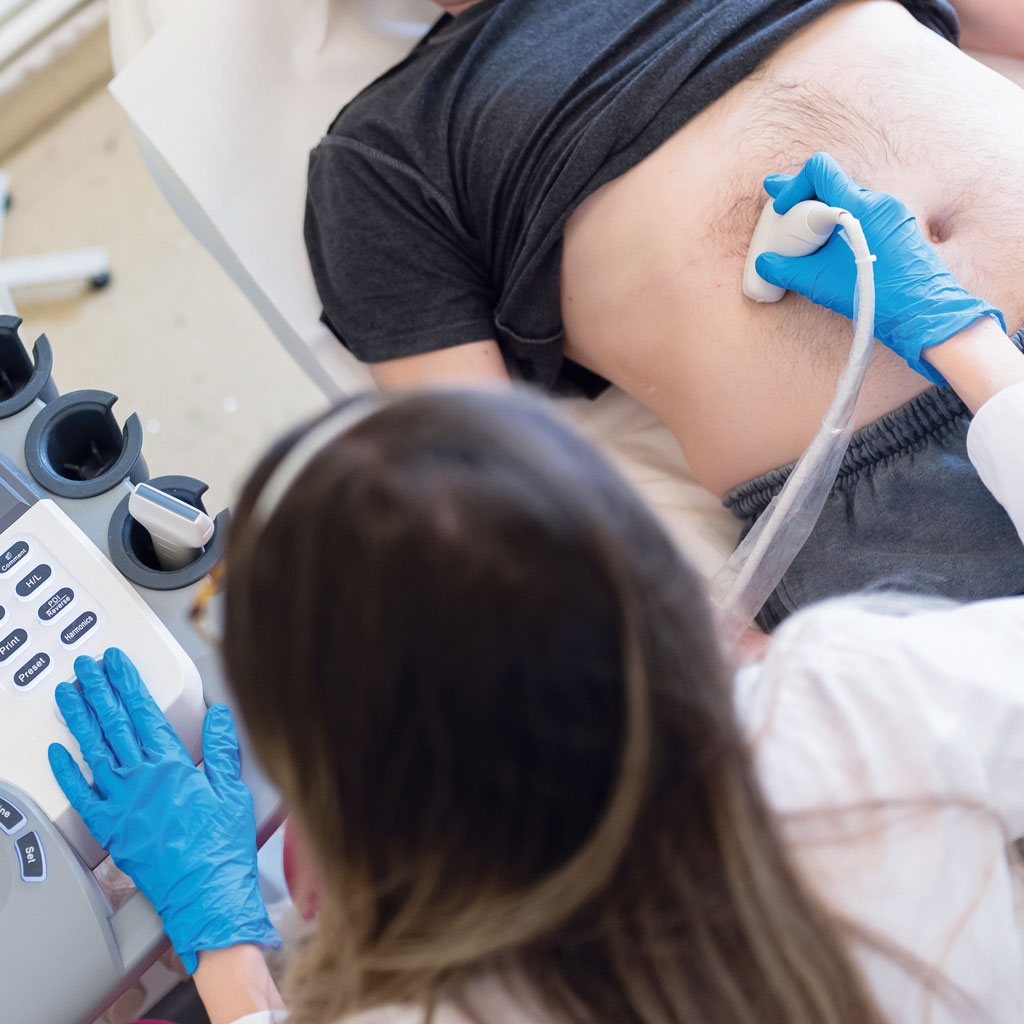
Ultrasound is usually the first way of imaging the kidneys. It uses sound waves rather than radiation, needs no contrast, costs less than the alternatives, and can be repeated as often as necessary, which matters a great deal for anyone who will be followed over years.
It is very good at showing the size and shape of the kidneys, at distinguishing a simple fluid-filled cyst from a solid mass, and at detecting hydronephrosis, which is swelling of the collecting system caused by a blockage somewhere downstream. It is also the standard test in pregnancy and in children, for the obvious reason that it carries no radiation.
What it does less well is find small stones, particularly stones that have moved down into the ureter, and it is more limited in patients with a larger body habitus.
CT
When the question is stones, CT without contrast is the definitive answer. It finds stones of nearly every composition, shows exactly where a stone sits, measures it, and shows whether it is obstructing. For someone arriving with sudden severe flank pain, this is the test that settles the matter quickly.
With contrast, CT becomes a different tool again. It shows how tissue takes up and washes out contrast over time, which is how a solid renal mass gets characterized, and it maps the blood vessels and the collecting system in detail before surgery or a procedure.
The tradeoff is radiation, which is why low-dose protocols are used for stone studies and why repeated CT in a young patient with recurrent stones is something a physician thinks carefully about when imaging the kidneys.
MRI
MRI is used less often for imaging the kidneys but it fills a real gap. It characterizes soft tissue exceptionally well without any radiation at all, which makes it useful for following a complex cyst or an indeterminate mass over time in a younger patient, and for patients who cannot receive iodinated CT contrast.
It takes longer than the other two when imaging the kidneys and requires the patient to hold still, sometimes with breath holds, so it is chosen when the question genuinely calls for it.
Reading the Words in Your Report After Imaging the Kidneys
Two terms cause more worry than they usually warrant.
A simple renal cyst is a fluid-filled sac. They are extremely common, they increase with age, and a simple cyst with no concerning features needs no treatment and often no follow-up at all. Radiologists grade cysts by complexity precisely so that the small number worth watching can be separated from the large number that are not.
An incidental finding means the scan showed something outside the reason it was ordered. Kidneys are in the field of view of most abdominal imaging, so they generate a lot of these. Some are worth a follow-up study and most are not, and the report will say which after imaging the kidneys.
Protecting Your Kidneys in the Meantime
The most common question patients raise about imaging and kidney health is contrast dye. Iodinated contrast used in CT is processed by the kidneys, which is why your kidney function is checked before certain contrast-enhanced studies and why your care team will ask about kidney disease and diabetes. For most people with normal function this is a routine check rather than a barrier, and if there is a concern the exam can often be done differently.
If you have been told your kidney function is reduced, mention it every time you are scheduled for imaging, even when nobody asks. It is the single most useful thing you can volunteer.
References
American College of Radiology. ACR Appropriateness Criteria, Acute Onset Flank Pain and Renal Mass. acr.org
RadiologyInfo.org. Ultrasound, Abdomen. radiologyinfo.org
National Institute of Diabetes and Digestive and Kidney Diseases. Kidney Tests. niddk.nih.gov